AGRICULTURAL DATA & TECHNOLOGY

Better decisions,
grounded in agronomy.

AgrowKnow puts math, science, and technology to work in everyday agriculture, with simple applications for farmers and the advisers they trust.

THE IDEA BEHIND THE NAME

It started
with AgrowKnowledge.

In the early 2000s, I worked on an NSF grant called AgrowKnowledge. Its purpose was to promote math, science, technology, and agriculture. That experience helped shape the vision behind the work I’m doing today.

We’ve developed an extraordinary amount of agricultural data and technology since then. I keep coming back to a practical question: how do we put that knowledge into the hands of the people making decisions in agriculture?

AgrowKnow’s name is a nod to AgrowKnowledge. It carries that idea forward: turn the math, science, and technology into simple-to-use applications for farmers and their trusted advisers.

THE FIELD GIVES THE DATA MEANING

Different parts of a field.
Different moments in a season.

A hilltop can dry out while a lower area stays wet. The same spot can grow a very different crop in a dry year than in a wet one. Soil, crop growth, weather, and management interact differently across a field and as the season unfolds.

A decision that fits one part of a field, or one stage of the crop, may need to change somewhere else or later in the season. The challenge is to understand those connections well enough to decide where, when, and how to act.

From the forecast
to the field-level plan.

Each application takes that same idea into a different part of farming. Together, they describe the direction I’m building toward.

WEATHER & AGRONOMY

FieldCast

What does the weather
mean for the work?

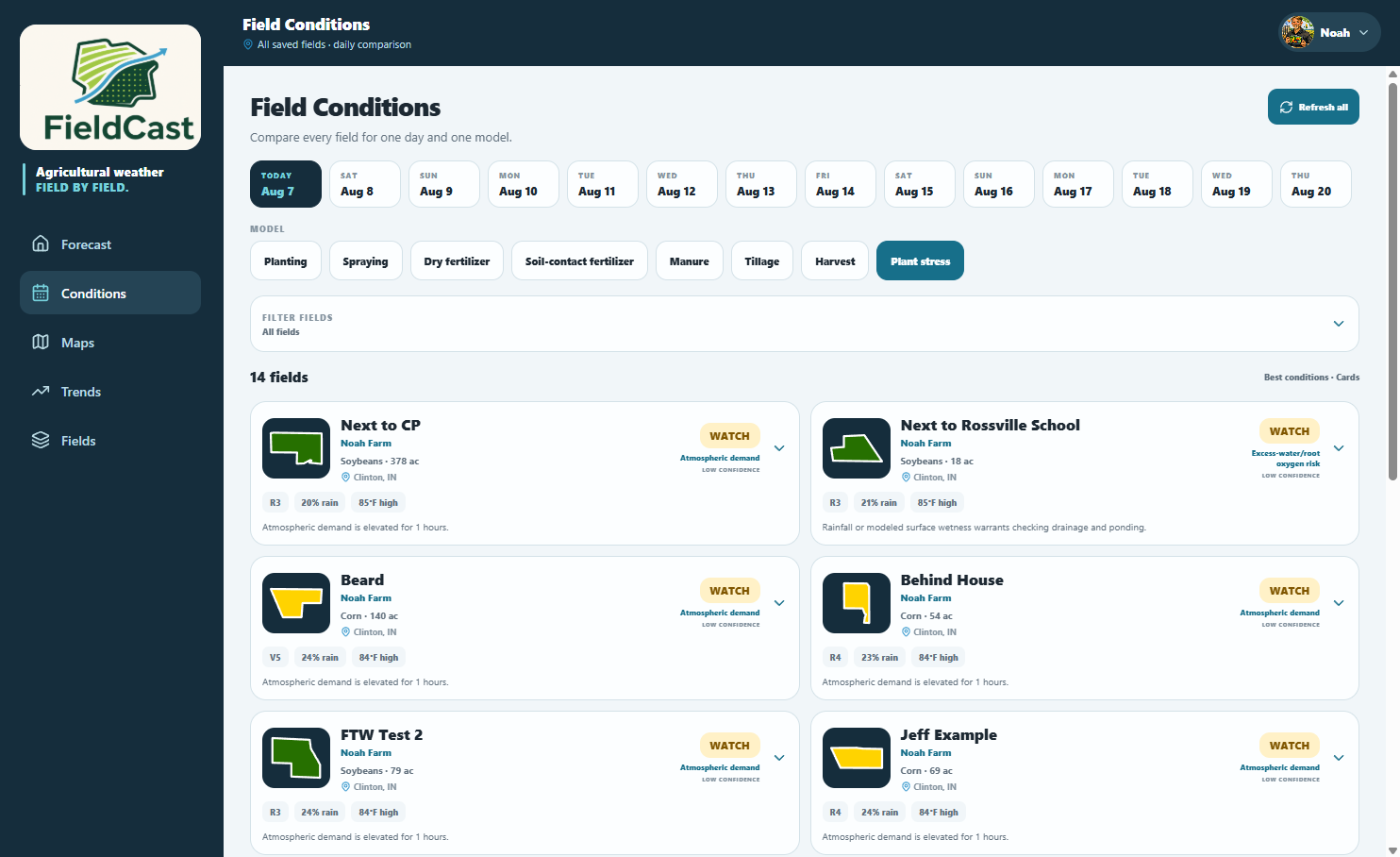
FieldCast brings past weather, current conditions, and the forecast together around your fields. See what has happened, what is happening now, and what may come next.

Start with the basic forecast, then connect the weather with corn, soybean, and other crop production. Growth models, seasonal comparisons, and agronomic modeling help put the weather in context: how the crop is developing, how this season compares with past years, and what the outlook could mean for the work ahead.

How has the weather shaped this crop—and what could the rest of the season bring?

Explore FieldCast
FieldCast operating conditions compared across saved fields

GENETICS × ENVIRONMENT × MANAGEMENT

Seed Plan

Place seed with the
whole field in mind.

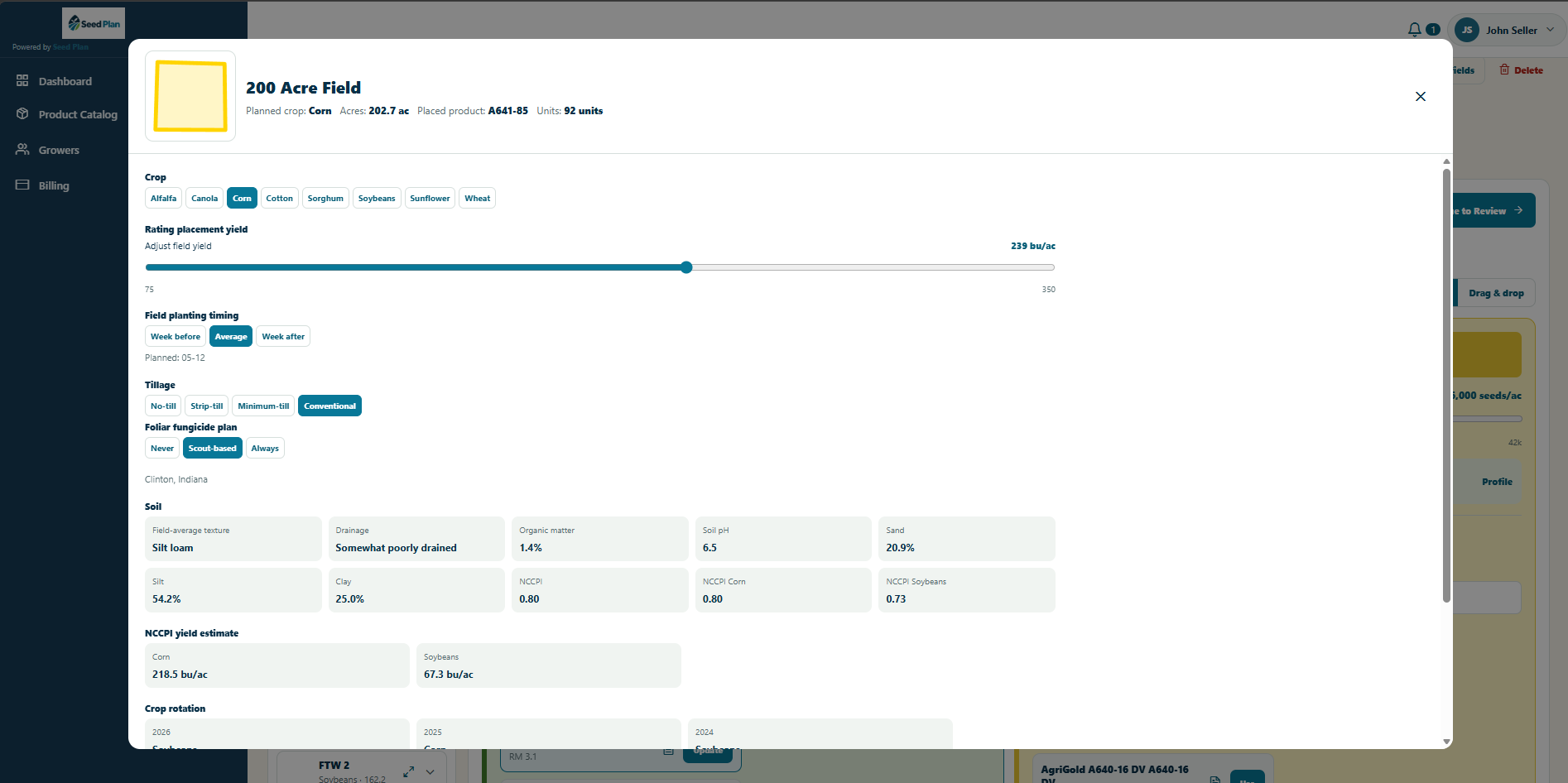
Seed Plan gives growers and their advisers a place to bring that knowledge together. Compare product characteristics with soil and yield environments, weather patterns, and management choices, then work through a field-by-field plan.

How does this product fit this field and the way we farm it?

Explore Seed Plan
Seed Plan field profile connecting the field with environmental and management context

CROP PERFORMANCE & BENCHMARKING

Crop Tracker

From the Corn Belt
to your own acres.

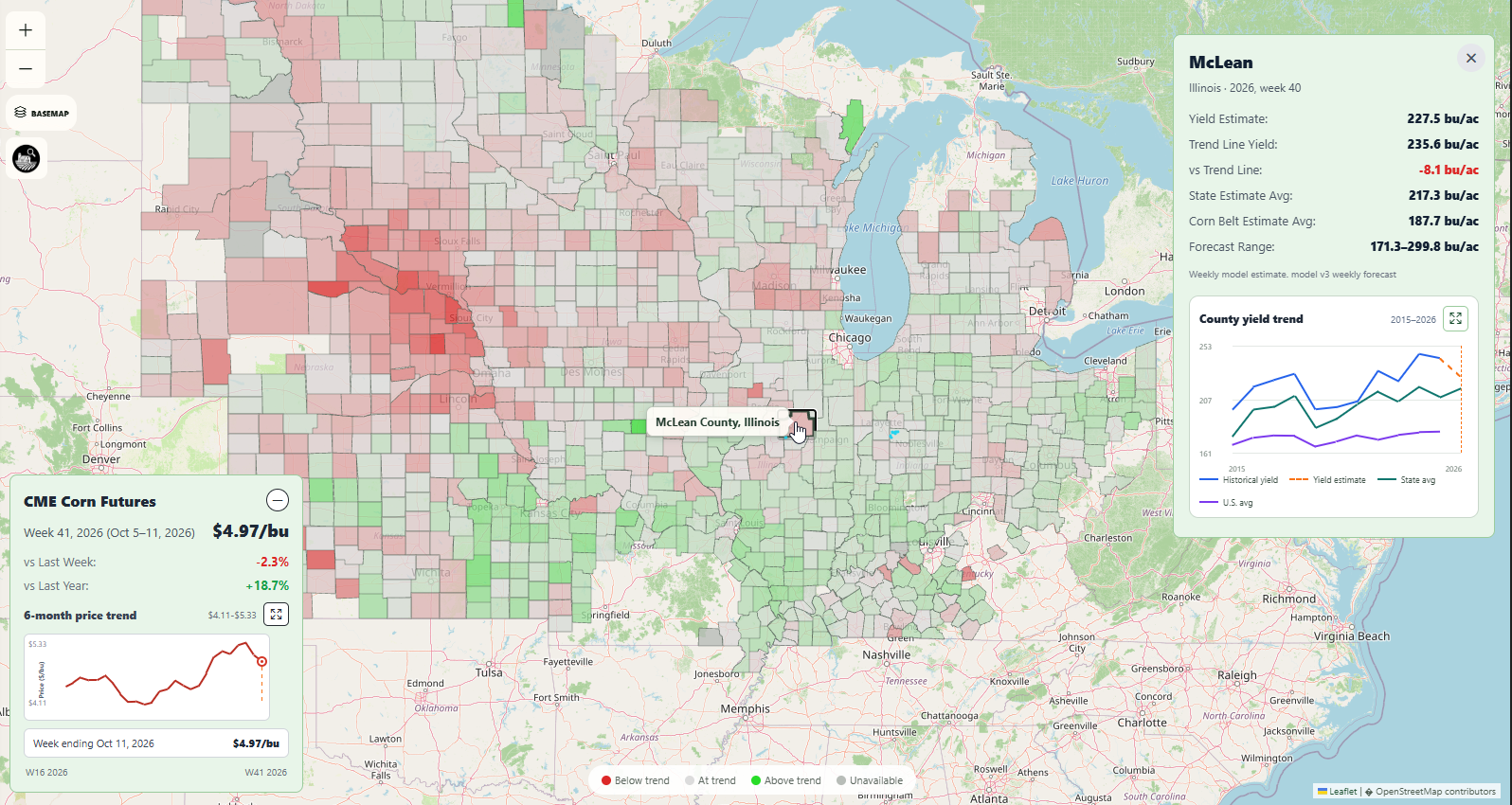
Start with the big picture: how the crop is developing, how yield trends compare, and what is happening across the Corn Belt. Then move closer to the farm and the individual field.

The next step is benchmarking. How does my field compare with others in the area—or across the Corn Belt? The goal is to put performance in context, accounting for the soils, seasons, and management behind a useful comparison.

How is this field performing, and what can a fair comparison teach us?

Explore Crop Tracker
Crop Tracker county yield outlook with historical and regional comparisons

THE ECONOMICS OF THE FIELD

Field Budget

A useful starting point.
A budget you can make your own.

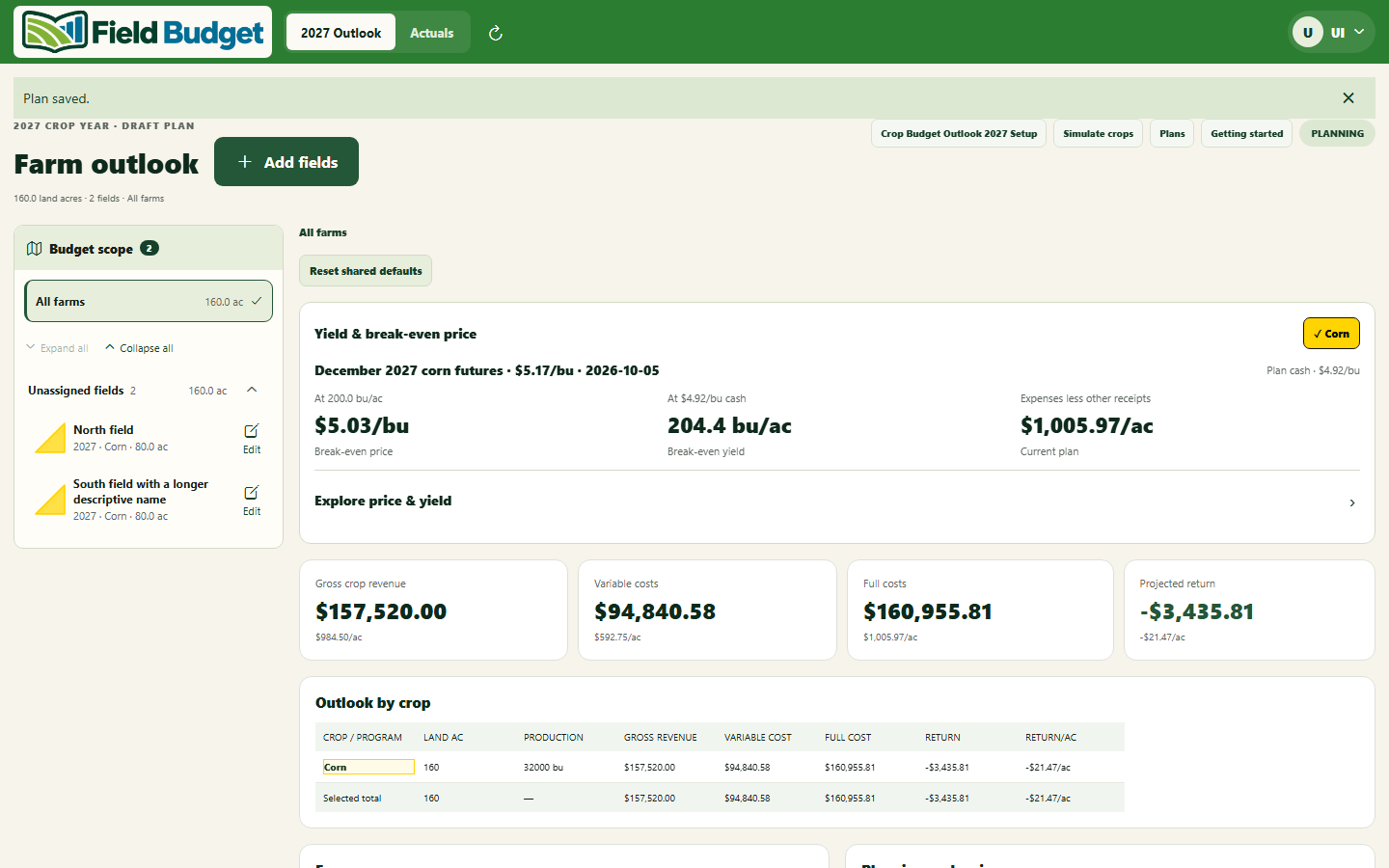
What a field can produce and what it costs to farm can change from season to season. Grain markets and input prices add another layer. Field Budget gives you a simple way to work through those moving parts.

Start with planning defaults, then adjust yields, prices, rent, and expenses to reflect your own operation. See how a change in yield, crop choice, or price changes the numbers behind the plan.

See how the year is shaping up. Compare what you planned with the costs, harvest, and sales you record. Ask what another crop could mean for the field, change the assumptions, and explore the effect on the farm outlook.

How am I doing this year—and what other crop or plan could I consider?

Explore Field Budget
Field Budget farm outlook showing costs, break-even figures, and projected returns

THE FUEL BEHIND THE WORK

Farm Fuel Calculator

From a pass across the field
to a season’s fuel cost.

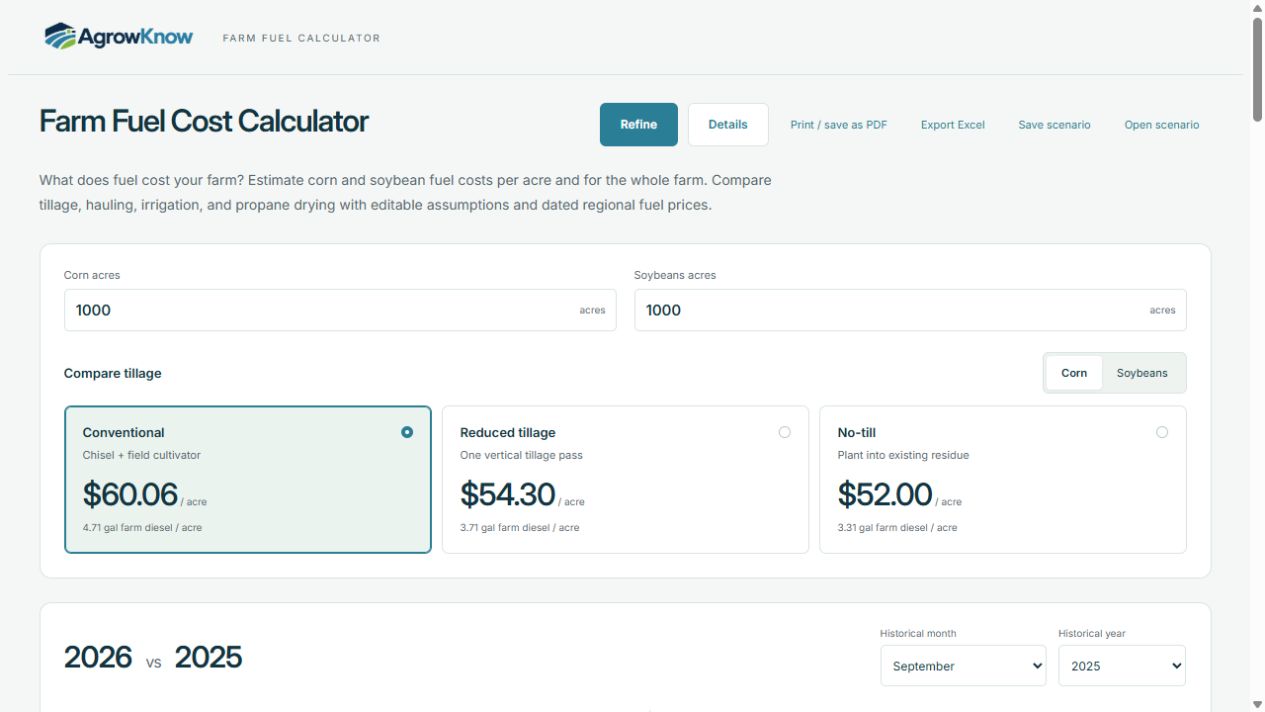
Fuel adds up across fieldwork, harvest, hauling, irrigation, and grain drying. The Farm Fuel Calculator gives you a way to work through those costs for corn and soybeans, per acre and across the whole farm.

Compare conventional, reduced tillage, and no-till starting programs. Adjust acres, operation passes, fuel rates, and supplier prices to reflect the way you farm, then see how a different fuel price changes the same plan.

Explore the methodology and historical diesel, propane, and gasoline benchmarks. Print a report, export an editable Excel workbook, or save a scenario to revisit later. No account is required.

What does fuel cost this farm—and how would a different plan or price change it?

Explore Farm Fuel Calculator
Farm Fuel Calculator with editable corn and soybean acres and three tillage fuel-cost comparisons

THE NEXT LAYER OF DETAIL

Go deeper into
the decisions within a field.

More tools are being developed for nitrogen, erosion, disease, and soil fertility—bringing deeper field questions into focused workflows.

NITROGEN PLAN · IN DEVELOPMENT

Think through
the whole nitrogen program.

What has already been applied? What rate, timing, or product could come next? Compare supported programs around the field, historical seasons, and costs, while keeping the assumptions visible.

How do I build a nitrogen program that fits this field and the season ahead?

Explore Nitrogen Plan

EROSION PLAN · IN DEVELOPMENT

Understand the land.
Compare the management.

Bring terrain, soils, rainfall, and management into a field comparison. Explore supported tillage, cover, and residue scenarios, with the sources and assumptions behind the soil-loss screening estimate.

How could a different practice change this field’s erosion picture?

Explore Erosion Plan

DISEASE WATCH · IN DEVELOPMENT

Connect crop health
with the season.

Bring weather, crop development, and scouting observations into a clearer view of disease risk. The tool is being developed to help farmers and advisers focus attention and work through disease-management decisions.

What should I be watching for in this crop as conditions change?

SOIL FERTILITY PLAN · IN DEVELOPMENT

Understand the soil.
Plan for the crop.

Connect sampling plans, soil-test results, field history, and crop needs. The aim is to make soil information easier to interpret and carry into a practical nutrient plan.

What can the soil supply, and where does the nutrient plan need attention?

FOR THE WORK IN YOUR GIS

Agricultural tools
for QGIS.

I also build QGIS plugins for people working directly with agricultural maps and data. These tools bring the same practical approach to preparing field layers, reviewing yield data, and creating demonstration datasets.

Fake Farm Data Generator

Create clearly labeled synthetic soil-test, planting, as-applied, and yield data for demonstrations and software testing.

View on QGIS

Field Boundary Tools

Build agronomic field-boundary layers from local data, with state and county selection and automatic input discovery.

View on QGIS

Yield Data Cleaner

Map and review combine yield-monitor data, then clean it field by field while keeping the original data intact.

View on QGIS
View all my QGIS plugins
Noah FreemanNOAH FREEMAN

ABOUT NOAH

Noah Freeman

Agronomy & agricultural technology

Noah Freeman is an agronomist, educator, and agricultural technology builder. His work connects field experience with an understanding of plants, soils, weather, and equipment.

After teaching agriculture, he led precision ag and agronomy teams and worked in agricultural software development and product management. Through AgrowKnow, he brings that experience into practical tools that help growers and advisers make sense of field data and make decisions.

Let’s talk about what you’re working on